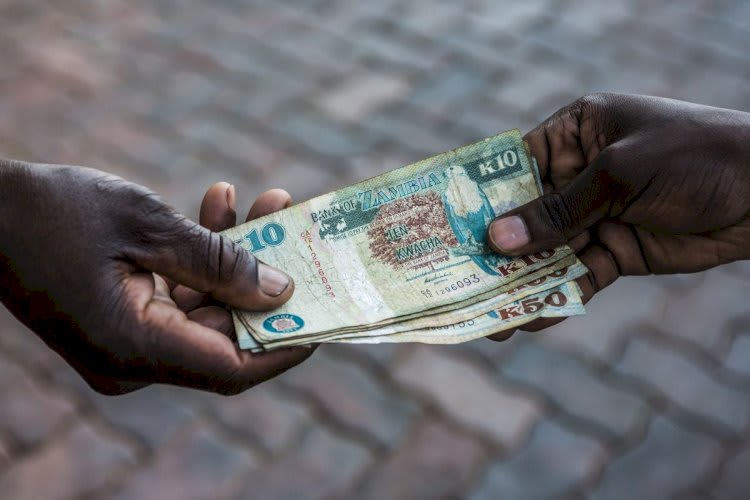
For more than two decades, financial inclusion has become one of the defining objectives of development policy. Governments have expanded banking infrastructure, regulators have simplified account opening requirements, fintech companies have transformed digital payments, and development partners have invested billions of dollars to ensure that more people can access formal financial services.
By almost every conventional measure, the movement has been remarkably successful.
Where traditional banks once struggled to reach rural communities, mobile money agents now operate in villages, marketplaces and trading centers that previously had little or no financial infrastructure. This transformation deserves recognition. It represents one of the most significant financial innovations the continent has experienced.
Yet it also raises an uncomfortable question.
What if financial inclusion has become a solution searching for a problem?
That question is not meant to diminish the enormous achievements made over the past two decades. Rather, it asks whether the original challenge that inspired the financial inclusion movement—limited access to formal financial services—is still the primary obstacle preventing people from improving their economic lives.
The Mobile Money Revolution
Perhaps the strongest evidence comes from mobile money.
Few innovations have spread as rapidly or as profoundly across Africa. Millions of people who had never entered a bank branch now transfer money, pay bills, receive salaries, save electronically, and conduct business using nothing more than a mobile phone.
In many countries, digital wallets have become more common than traditional bank accounts. Financial services have effectively been placed into people's pockets.
If financial exclusion was fundamentally an access problem, then mobile money should have dramatically reduced it.
And in many respects, it has.
But another reality persists.
Despite unprecedented growth in digital financial services, poverty remains widespread, informal employment dominates many economies, household incomes remain volatile, and wealth accumulation continues to be elusive for millions.
This presents a paradox that deserves greater attention.
The Empty Account Paradox
I call it the Empty Account Paradox.
Simply put, financial inclusion measures whether people possess financial instruments—not whether they possess the economic means to use them meaningfully.
A bank account is a container.
A mobile wallet is a container.
Neither creates wealth.
They merely store, transfer, and manage whatever wealth already exists.
The development community has understandably celebrated the growing number of financial accounts. Yet ownership of an account tells us remarkably little about the amount of money flowing through it.
Many accounts remain dormant.
Many mobile wallets fluctuate between zero balance and the next salary payment.
Many households have access to credit but lack stable income to service it sustainably.
The issue is no longer whether people can access financial services.
The issue is whether they have sufficient and reliable income to make those services transformative.
Access Is Not Prosperity
For years, development discourse often assumed a straightforward chain of causality:
Financial access → Financial inclusion → Poverty reduction.
Reality has proved more complicated.
Financial services certainly reduce transaction costs. They improve convenience, enhance security, facilitate remittances, and increase resilience to shocks. These are significant achievements that should not be underestimated.
However, financial services do not create employment.
They do not raise productivity on their own.
They do not manufacture goods.
They do not cultivate crops.
They do not build competitive industries.
Economic value is created in productive sectors of the economy—not inside financial institutions.
The financial system can allocate capital efficiently, but it cannot replace the process of producing wealth.
From Financial Inclusion to Economic Inclusion
Perhaps the next frontier of development policy is not financial inclusion.
Perhaps it is economic inclusion.
The distinction matters.
Financial inclusion asks whether people can access banking, payments, credit, insurance, and savings.
Economic inclusion asks whether people can participate meaningfully in productive economic activity that generates sustainable income.
One concerns access to financial tools.
The other concerns access to opportunities.
One measures accounts.
The other measures livelihoods.
This shift in perspective changes the policy conversation.
Instead of asking:
"How do we help more people open bank accounts?"
we might instead ask:
How do we help more people create businesses?
How do we improve productivity?
How do we enable farmers to generate greater value?
How do we build industries that create quality jobs?
How do we increase household incomes before asking households to save?
These questions move beyond finance and into the broader architecture of economic development.
Measuring What Matters
Perhaps it is also time to reconsider how we measure success.
For years, indicators such as account ownership, ATM density, agent networks, and digital payment adoption have dominated discussions about financial inclusion.
These metrics remain valuable.
But they are incomplete.
An economy where everyone owns a bank account but few possess disposable income cannot reasonably claim to have achieved meaningful inclusion.
Success should increasingly be measured by productive employment, household income growth, business formation, enterprise productivity and wealth creation.
Financial inclusion should become an enabler of these outcomes—not the outcome itself.
A New Development Conversation
This is not an argument against financial inclusion.
On the contrary, accessible financial systems remain essential to modern economies. Mobile money has transformed commerce across Africa. Digital banking has expanded choice, reduced costs, and brought millions into the formal financial ecosystem.
These achievements should be celebrated.
But access is only the first chapter.
The harder—and arguably more important—challenge begins afterward.
A bank account cannot substitute for a job.
A mobile wallet cannot substitute for productivity.
Credit cannot substitute for sustainable enterprise.
Ultimately, the purpose of a financial system is not merely to include people—it is to support an economy in which people have something meaningful to finance.
Perhaps the greatest challenge facing development today is no longer helping people gain access to the financial system.
It is helping them create wealth worth banking.