For many university students, finding academic material can sometimes be almost as difficult as studying it.
A past examination paper may exist somewhere. A lecture note may have been shared months ago. A quiz might be sitting on someone's phone. But finding the material can mean searching through WhatsApp groups, asking classmates, checking Google Drive folders or calling someone who may—or may not—have the document.
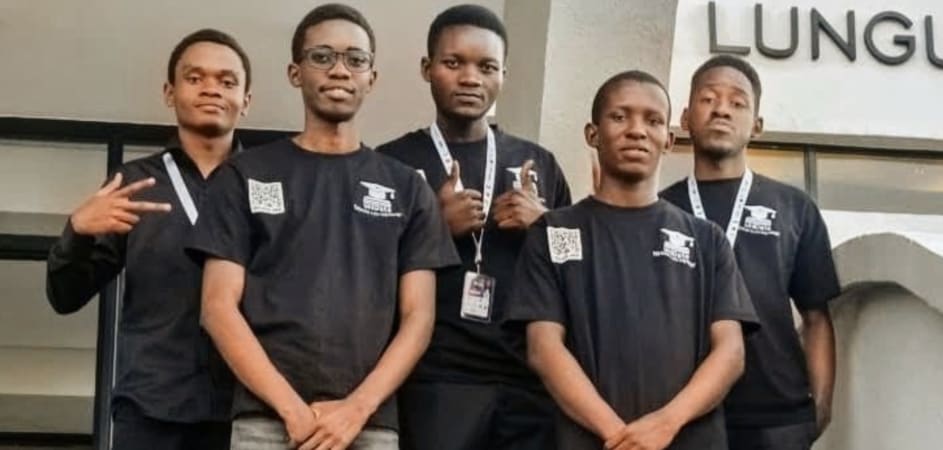
That frustration is what led two students at the Copperbelt University to start building UniData, a digital platform designed to bring academic resources and other elements of university life into one place.
The platform currently brings together past examination papers, lecture notes, quizzes, timetables and other academic resources, while newer versions have expanded into personal study timetables and university events.
As of September 20, UniData says it had recorded more than 4,500 downloads on Google Play, with more than 3,500 active users across its platforms. It currently has a presence at the Copperbelt University, the University of Zambia and Mulungushi University.
For co-founder Newton Katete, the idea started with a problem the founders were experiencing themselves.
A problem students already knew
“We found it hard to find useful academic material,” Katete told KSJ.
According to him, the material students needed was often scattered across WhatsApp groups, individual phones and Google Drive accounts. In some cases, students knew a past paper existed but spent considerable time trying to find someone who had it.
“Some who were not strong even gave up looking for that paper,” he said.
That experience became the starting point for UniData.
Rather than approaching the problem as outsiders trying to understand student life, the founders were themselves students dealing with the problem every day.
The result was a simple proposition: put academic resources in one organised platform.
It also produced the company's slogan: “For students, by students.”
Starting with an APK
UniData did not begin with a large technology infrastructure or a substantial startup budget.
The founders first tested the idea among classmates, distributing an Android APK through Google Drive.
They uploaded academic materials, watched how students responded and gradually improved the product.
The application eventually made its way onto Google Play.
Katete says one of the biggest lessons from that process was that developing software is only one part of building a technology company.
“You also need the market, the people that need it, trust it and find value in it,” he said.
That has influenced the way the team approaches development.
The UniData of today, he says, is not exactly the same product they imagined at the beginning because users have continued to influence what gets built.
Growing beyond CBU
The platform's strongest initial concentration was at the Copperbelt University.
It has since expanded to the University of Zambia and Mulungushi University.
UniData says it currently covers about 10 programmes at CBU, approximately 13 at UNZA and three at Mulungushi University, although the founders acknowledge that coverage is still incomplete.
For the team, the numbers represent early validation rather than a finished expansion story.
“There are many programmes and universities we have not covered yet,” Katete said.
The team says it has also been receiving requests from students at other institutions to bring their universities onto the platform.
The reality of being student founders
Building a startup while studying creates a particular set of constraints.
There are product issues to solve, users to support and growth to manage—but there are also examinations and assignments.
“There are instances where UniData needs serious attention and we have an examination or test in the morning,” Katete said.
Funding is another challenge.
The founders have had to make decisions around what they can build with the resources available rather than what they might build with unlimited capital.
One example is iOS.
UniData currently has a web version for iPhone users, while an iOS application remains constrained by the cost of getting onto Apple's App Store and maintaining the platform.
For the team, this has become part of the startup education itself: building around available resources while continuing to move forward.
They have also learned that getting someone to download an application is different from giving them a reason to keep using it.
“The product downloaded should add value to the user,” Katete said.
More than the founders
UniData is not being built by its two co-founders alone.
The wider structure includes a board made up of students, teams working at UNZA and Mulungushi University, a social media manager and student ambassadors.
The university-based teams play an important role in identifying whether the same problems experienced at CBU exist elsewhere.
For Katete, this distributed structure is part of what has allowed UniData to grow.
Each person has a defined role, but the platform itself is intended to be bigger than its original founders.
That will become particularly important as the current founders eventually leave university.
The team is already looking at ambassadors as part of the next generation that can continue building UniData's presence on campus.
The K20 question
UniData uses a freemium model, allowing students to access parts of the platform without paying while offering additional features through a premium package.
The current premium price is K20 per month.
For a student-focused product, monetisation presents an obvious balancing act.
The platform has costs: servers, development, marketing, expansion and the people working behind it. At the same time, pricing cannot become so high that students are excluded from a product designed around their needs.
For the founders, sustainability therefore matters as much as affordability.
The challenge is finding a point where UniData can generate enough revenue to keep operating while remaining accessible to its primary users.
When software becomes useful
For the founders, the most meaningful measure of progress is not necessarily the number of features in the application.
It is what happens when a student actually uses one.
Katete points to moments when students tell the team that they found a past paper on UniData, discovered a question through one of its quizzes or used material from the platform to prepare for an assessment.
“That is the moment tech stops being code and becomes useful,” he said.
It is a useful description of the journey the platform has taken—from an idea discussed among students to a product being used by thousands of them.
AI beyond the chatbot
The team's next technological frontier includes artificial intelligence.
But Katete says the intention is not simply to add a chatbot because AI is fashionable.
The bigger opportunity, in his view, is using AI to help students move from finding information to actually understanding it.
That could mean systems that understand what a student is studying and provide more relevant academic support rather than generating generic responses.
For UniData, the question is therefore less about whether AI can be added and more about how it can be applied meaningfully to the academic experience.
Building through UpSurge Technologies
UniData sits within a broader venture, UpSurge Technologies.
The long-term ambition is to make UniData a familiar part of university life in Zambia before potentially expanding beyond the country.
The founders want academic resources, revision, academic support, timetables and university events to be areas where students naturally consider UniData.
But Katete says UpSurge's ambitions extend beyond one application.
The broader objective is to build practical technology around problems the team understands first-hand.
Over the next three to five years, he says he would rather see the company have a small number of products that people genuinely use than a long list of applications without a clear need.
That philosophy perhaps captures the story of UniData itself.
It did not begin with an attempt to build the next big technology platform.
It began with students looking for a past paper.
And somewhere between WhatsApp groups, Google Drive folders, examinations and limited startup resources, that small inconvenience became a product now being used by thousands of students.
For Katete and his fellow student founders, the larger lesson is straightforward: meaningful technology does not necessarily have to wait until graduation.
“Students in Zambia should not have to wait to graduate and do something meaningful. We start now, learn now, fail now at some things and hopefully build something meaningful in the end.”
Founder: Newton Katete, Co-Founder, UniData / UpSurge Technologies
Platform: UniData