Nsembe Technologies enters gaming with Kopala beta
A Zambian technology company is taking its next experiment beyond finance, education and data — into video games.
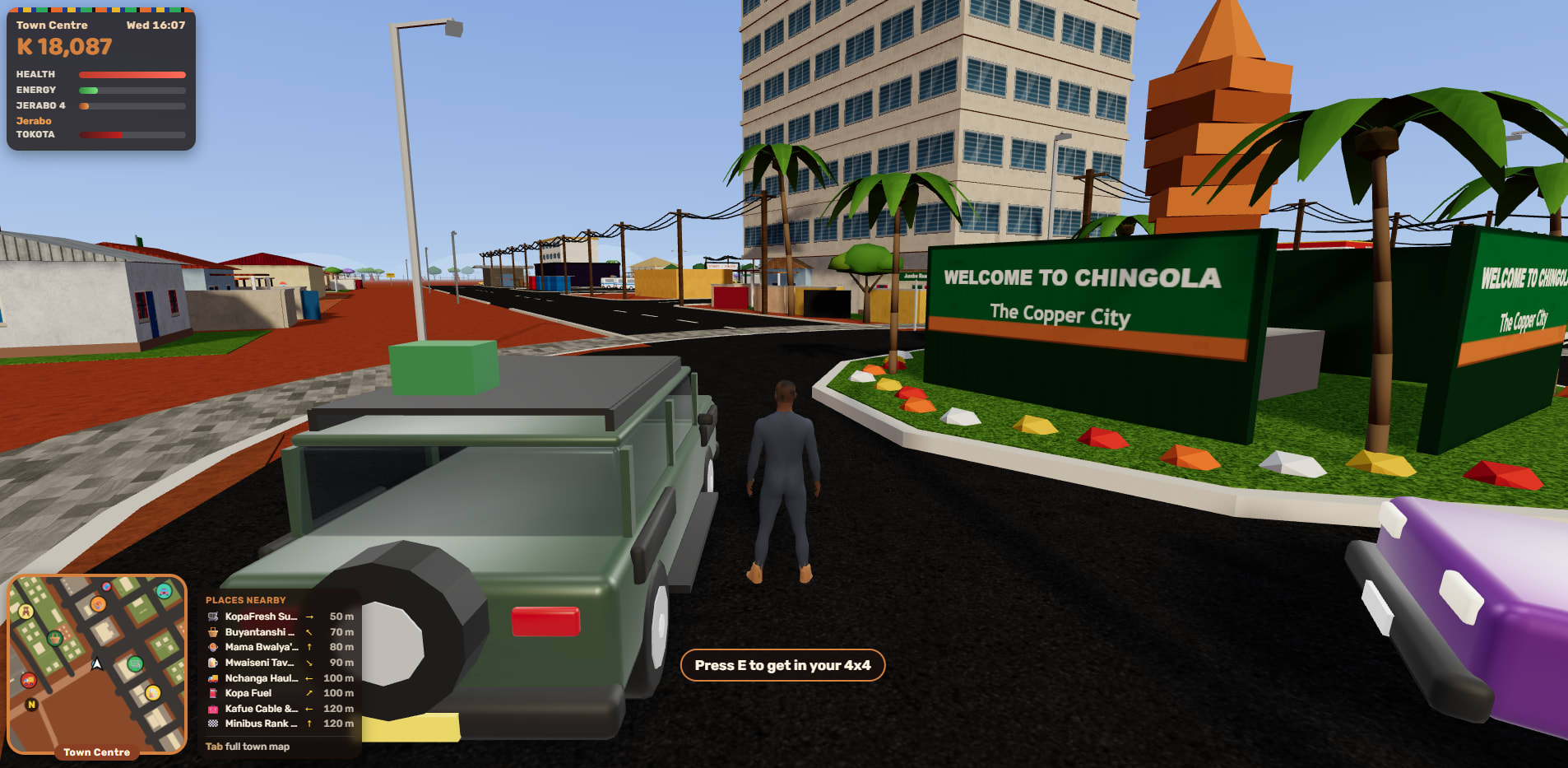
Nsembe Technologies has launched the beta version of Kopala, an open-world game set in Chingola on Zambia’s Copperbelt, marking the first release from its new game development division, Nsembe Games.
The game is being opened to early players for testing as the company develops what it describes as a series of “street stories from Zambia.”
Kopala puts players in the fictional role of Chola, who arrives in Chingola from Lusaka carrying little more than a bag, a debt and unfinished business.
From there, the game draws on everyday life around the Copperbelt: copper dumps, minibus ranks, football pitches, markets, neighbourhoods and the informal economy surrounding the mines.
The setting is deliberately recognisable.
Rather than creating an imaginary African city, Nsembe Games is attempting to turn real Zambian urban environments into playable spaces — starting with Chingola before expanding the story to other cities.
“Street stories from Zambia.”
That is the broader idea behind Nsembe Games.
The company says future instalments will take Chola's story to Lusaka and Kitwe, with planned settings including Kamwala Market, Cairo Road, Lusaka's minibus stations, Nkana and Chimwemwe.
The approach is interesting because Zambia has produced plenty of music, film and digital content rooted in local culture, but relatively little commercially developed video-game content built around recognisable Zambian places and everyday life.
Kopala is an attempt to explore that gap.
It is also a different direction for Nsembe Technologies, whose existing work has centred largely on institutional software, financial intelligence, education systems and data infrastructure.
The game therefore appears to be both a creative project and a technology experiment.
For now, Nsembe is keeping the release deliberately small. Kopala is in beta, with the company inviting early players to test the game and provide feedback before further development.
The current version runs directly in a web browser and is designed primarily for computers with a keyboard.
Nsembe says the game is fiction: the places are real, but the characters and story are invented.
That distinction matters, particularly with a game that draws heavily on recognisable communities, occupations and urban experiences.
For Nsembe, however, the larger ambition appears to be straightforward: build games that feel like they could only have been made in Zambia.
Kopala is the first test.
If the experiment works, Chingola may only be the beginning.
Kopala is available for early testing at kopala.space.