A football manager does not win a match simply because he picked a good formation in the dressing room. Pep Guardiola has shown how a 4-3-3 can evolve during a match, Jürgen Klopp demonstrated the power of aggressive pressing, and Diego Simeone built competitive sides around defensive discipline and rapid transitions. Their success was never just about the numbers on the team sheet. It depended on the quality of the players, how well the system connected them and the ability to adapt when circumstances changed.
But there is another question worth asking about any national team: who gets the opportunity to wear the jersey in the first place? A manager can have an excellent formation, but if the talent scouts overlook players outside a handful of familiar clubs, the team may never reach its full potential.
That question has implications beyond football. As Zambia embarks on the Grow Zambia Agenda, the country must think not only about the economic formation it has chosen, but also whether that formation allows productive talent, investment and opportunity to emerge from across the country.
The Government has set out an ambitious starting formation: 10 million tonnes of maize, 10,000 megawatts of electricity, five million tourists, three million tonnes of copper, three million tonnes of soya beans, one million tonnes of wheat, one million tonnes of sugar and US$1 billion in beef exports.
It is an ambitious 10-10-5-3-3-1-1-1 formation. And there is merit in having a clear set of national ambitions. After years in which the economic conversation was dominated by debt restructuring, fiscal consolidation and restoring macroeconomic stability, a stronger focus on productive expansion is welcome. Stabilisation is necessary, but it cannot be the final destination. Zambia needs more investment, higher productivity, competitive exports and a broader base of economic activity.
Grow Zambia offers a framework around which those ambitions can be organised. The challenge is to turn the framework into a functioning economic system—and ensure that its benefits reach beyond the sectors and locations already best positioned to take advantage of growth.
Targets are the starting positions, not the strategy
A football formation establishes where players begin. It does not guarantee that they will create chances, defend effectively or win matches. Economic targets work in much the same way.
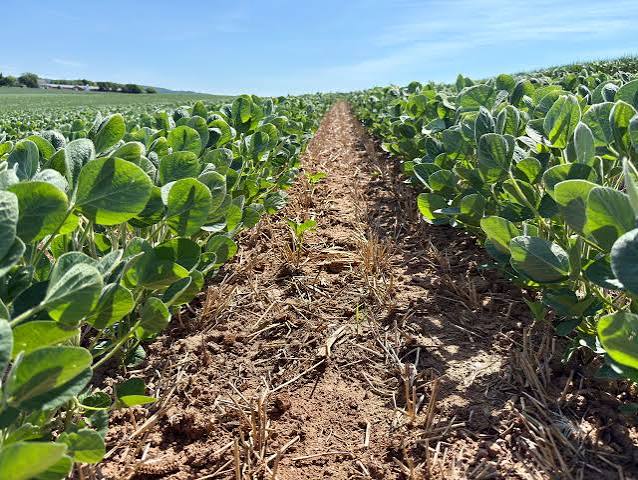
Producing 10 million tonnes of maize will require more than increasing the number of hectares planted. It will depend on yields, irrigation, access to inputs, extension services, storage, transport and reliable markets. If output rises but farmers continue to face high production costs, poor market access and weak bargaining power, the national production target could be met without delivering a corresponding improvement in rural incomes.
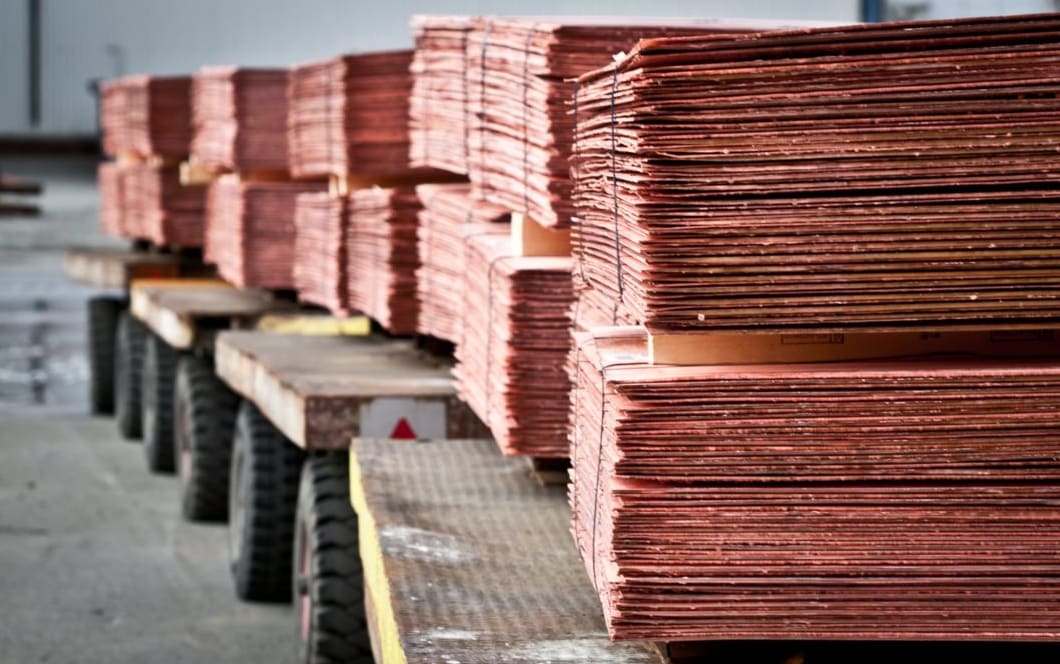
The copper target is similarly dependent on investment, electricity, transport, skills and a predictable regulatory environment. Five million tourist arrivals will require more than successful marketing. Connectivity, accommodation, tourism infrastructure, visitor experiences and the cost of travelling within Zambia will matter. A US$1 billion beef export industry will depend on livestock productivity, veterinary services, disease control, processing facilities, cold chains and access to markets that meet international standards.
These are not arguments against the targets. They are arguments for taking them seriously enough to address the systems behind them.
The targets are also interconnected. Reliable electricity supports mines, factories and agro-processing. Better roads connect farmers to markets and exporters to transport corridors. Financial services help businesses invest. Digital systems can lower transaction costs and improve access to information. Skills and institutions connect all these investments to productive outcomes.
In football terms, Zambia needs a strong midfield: the infrastructure, finance, skills and institutions that connect the sectors expected to lead growth. Without that connective tissue, individual sectors can perform well while the wider economy fails to capture the full benefit.
The national team must draw from the whole country
This is where the debate becomes more important than the headline production figures.
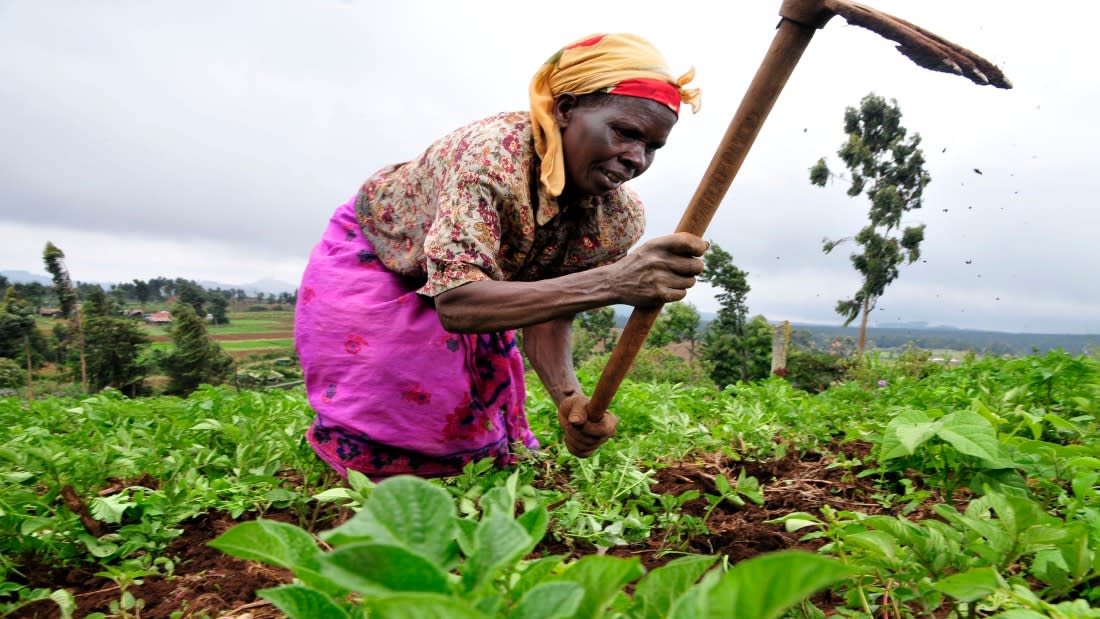
Zambia's economic potential is not concentrated in one city, one province or a small group of established businesses. It is distributed across farmers, traders, manufacturers, tourism operators, artisans, technology entrepreneurs and communities with different resources and constraints. Yet the ability to turn potential into productive activity is not evenly distributed.
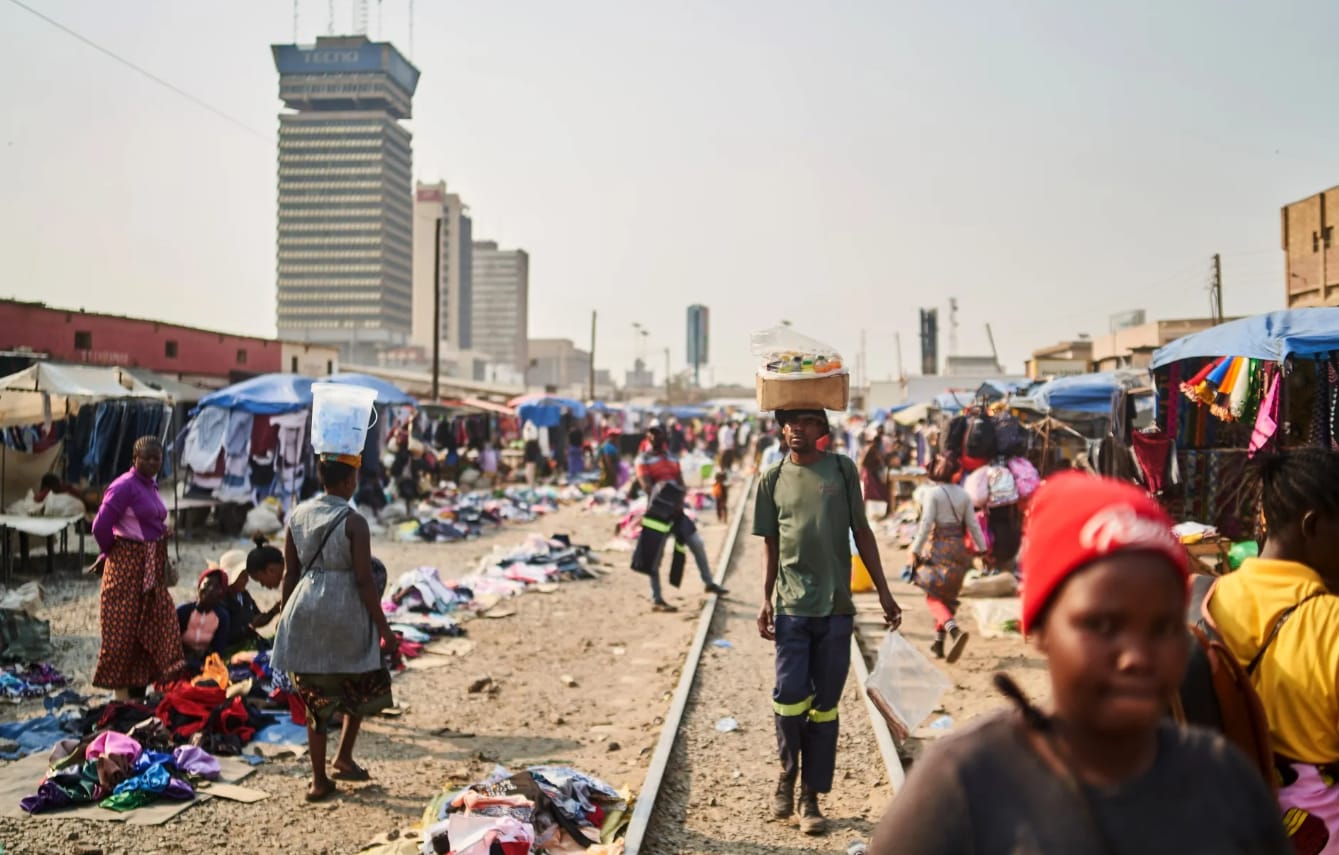
A business in Lusaka may have easier access to banks, professional services, reliable internet, skilled workers and major markets than a small enterprise in a rural district. A farmer near a good road may be better placed to supply a processor than one whose produce must travel over poor roads. A young person in an urban centre may have more opportunities to acquire digital skills, connect with employers or access business networks than someone equally capable in a remote community.
These differences are not simply social concerns sitting outside the growth agenda. They are economic constraints.
When a capable entrepreneur cannot obtain finance because the business is too small or too far from established networks, potential investment is lost. When a farmer cannot reach a market at a reasonable cost, productive capacity is wasted. When a young person cannot access relevant skills or reliable digital infrastructure, the economy loses potential workers, innovators and taxpayers.
The question, therefore, is not whether every district can immediately develop the same industries or produce the same output. Geography, natural resources and comparative advantage will inevitably shape economic activity. The question is whether people and businesses across the country have a credible route into the opportunities created by national growth.
A strong economic formation should allow different regions to contribute according to their strengths while benefiting from the wider economy. Copperbelt mining should generate opportunities for local suppliers, engineers and manufacturers. Agricultural growth should create markets for rural producers and opportunities for processors. Tourism should generate business for communities, transport operators, food suppliers and cultural enterprises. Digital transformation should make it easier—not harder—for people outside major urban centres to participate.
If growth is concentrated among firms and households already equipped to benefit, Zambia may increase national output without fully mobilising its national talent.
That is the equivalent of selecting a national team from only a few clubs when capable players are available throughout the country.
Growth is not the same as shared prosperity
There is an important distinction between an economy growing and the living standards of its population improving broadly.
Gross domestic product can rise because mining output expands, agricultural production increases or investment accelerates. These are positive developments. But the distribution of the resulting income, the quality of jobs created and the opportunities available to different households will determine how widely that growth is experienced.
This is where the Gini coefficient becomes relevant. It is a measure of income or consumption inequality: broadly, a higher value indicates a more unequal distribution, while a lower value indicates a more equal distribution. It does not tell the entire story of poverty or opportunity, and it should not be treated as a substitute for other indicators. But it helps raise a question that headline growth figures cannot answer on their own: who is benefiting from economic progress?
Zambia could meet several production targets and still face a situation in which many households struggle to afford essential goods, small businesses remain constrained by expensive credit, and young people cannot find productive employment. That outcome is not inevitable, but neither is it ruled out by higher production.
The structure of growth matters. Does agricultural expansion increase farm-gate incomes, or do farmers remain exposed to high input costs and weak bargaining power? Does mining expansion create local supply chains and skilled employment, or does much of the economic activity remain disconnected from domestic businesses? Does tourism growth generate opportunities for communities around attractions, or are local enterprises unable to meet the requirements of the market? Does manufacturing expansion create accessible jobs and develop local capabilities?
These are questions of economic design, not arguments against growth.
Nor should inequality be reduced to a simple rural-versus-urban divide. There are poor households in cities and prosperous producers in rural areas. Inequality can exist within provinces, industries and communities. The underlying issue is whether access to opportunity depends too heavily on where a person is born, the assets their family already possesses or the networks they can access.
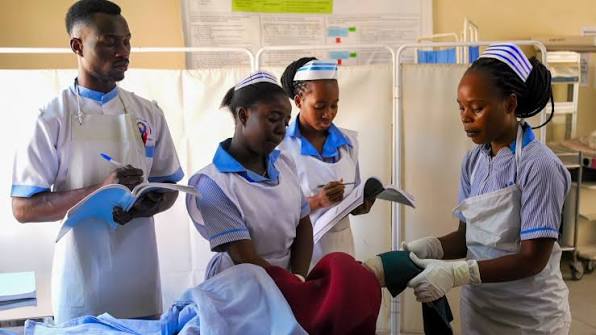
A credible national growth strategy should seek to widen the routes through which people can become productive. That means improving education and healthcare, strengthening agricultural extension, expanding access to infrastructure, supporting skills development and making finance more accessible to viable businesses. It also means evaluating whether public investment is reaching areas where it can unlock productive potential.
The ultimate test is not whether every region grows at the same rate. It is whether people have a fairer chance to participate in, and benefit from, the country's development.
The role of government is to create the conditions for growth
The private-sector emphasis in Grow Zambia is important. Government cannot finance or operate every productive enterprise. Sustainable growth will require businesses that invest, innovate, employ people and compete in domestic and international markets.
Government's role is to create the conditions in which that activity becomes possible: predictable policies, efficient public services, reliable infrastructure, appropriate financing arrangements and credible regulation. Public-private partnerships, joint ventures and capital-market instruments can help mobilise investment, but financing structures do not automatically create productive outcomes. Projects must be commercially viable, risks must be allocated sensibly, and public liabilities must remain transparent and manageable.
The same principle applies to the Constituency Development Fund. With allocations scaled up to K40 million per constituency, there is an opportunity to improve local infrastructure, support skills development and address practical constraints on economic participation.
A road that connects farmers to a market can reduce transport costs. A reliable water system can support production and improve living standards. Skills programmes linked to actual labour-market needs can help young people secure productive work. Digital facilities can improve access to information and services.
But expenditure is not itself a measure of development. The relevant questions are whether projects are completed properly, whether they address genuine constraints, whether communities can maintain them and whether they generate lasting benefits. Public investment should be assessed by what it enables people and businesses to do—not simply by how much money has been allocated or spent.
This also requires a more deliberate connection between local development and national economic priorities. If Zambia wants more agro-processing, constituencies need to consider the infrastructure, skills and enterprise support that make processing viable. If tourism is to expand, local investment should help communities connect to visitor markets. If the digital economy is to grow, connectivity and skills must extend beyond the places where access is already strongest.
Decentralisation becomes economically meaningful when it brings decision-making closer to local needs and gives communities a practical stake in national development.
A formation must adapt when the conditions change
Even a well-designed economic strategy will encounter conditions it cannot control.
Inflation can accelerate, the kwacha can depreciate, interest rates can change, copper prices can fluctuate, fuel can become more expensive and drought can undermine agricultural output. Global demand and capital flows can shift. Several pressures can also emerge at once.
This is why the formation must be flexible.
If inflation rises persistently and currency pressures intensify, policymakers may need to place greater emphasis on macroeconomic stability, fiscal discipline and protecting purchasing power. If inflation moderates sustainably and financing conditions improve, there may be more room for productive investment and faster expansion. If copper prices rise, Zambia can use the opportunity to strengthen infrastructure and accelerate diversification. If prices fall, the economy should be better positioned to draw on agriculture, tourism, manufacturing and services rather than allowing an external shock to undermine the entire growth programme.
Such flexibility should not mean abandoning targets whenever implementation becomes difficult. It means adjusting the sequence, pace and instruments of policy while preserving the long-term objective.
Macroeconomic stability is central to that capacity. Inflation, interest rates, exchange rates, public debt and foreign reserves may appear less exciting than production targets, but they affect the cost of investment, household purchasing power and business competitiveness. Expensive credit can prevent viable firms from expanding. Sharp exchange-rate movements can raise the cost of machinery, fuel and industrial inputs, even as depreciation may improve the local-currency value of export earnings.
Stability and growth are not opposing objectives. Stability provides the foundation on which sustainable expansion can be built. But stability without productivity-enhancing investment can leave an economy orderly without becoming significantly more productive. Zambia must avoid both extremes: pursuing expansion without regard to macroeconomic constraints, and treating stabilisation as an end in itself.
The same principle applies to implementation. A public performance framework should track not only headline output but also the conditions that make it sustainable. Agriculture should be assessed through yields, irrigation, farm-gate prices and market access. Mining should be measured alongside investment, productivity, energy reliability and local value addition. Tourism should be evaluated through visitor spending and length of stay, not arrivals alone. Energy policy should consider transmission capacity and the reliability of supply to businesses.
These measures should be examined alongside inflation, exchange rates, interest rates, private-sector credit and fiscal performance. Regular reviews would help policymakers identify bottlenecks early, redirect resources where necessary and distinguish temporary shocks from deeper structural problems.
The agenda should function as a living economic management system, not merely a document whose success is judged at the end of five years.
The real test comes in 2031
There is much to commend in setting clear national production ambitions. Zambia needs direction, investment and a stronger focus on expanding its productive capacity. Grow Zambia gives the country a framework around which government, businesses and development partners can organise their efforts.
But the success of that framework will depend on more than the headline targets. It will depend on whether infrastructure connects productive regions to markets, whether financing reaches viable businesses, whether skills match economic needs and whether public institutions can translate plans into results.
It will also depend on who gets to participate.
By 2031, Zambia should be asking not only whether it produced more maize, copper, sugar or electricity, but whether farmers earned more from their work, whether businesses beyond the established commercial centres could grow, whether young people found productive opportunities, whether communities gained from nearby economic activity and whether improvements in national output translated into better living standards.
The country does not need every district to become a mining hub or every province to grow in precisely the same way. It needs an economy in which different regions can build on their strengths, connect to national markets and contribute to shared prosperity.
The formation is a useful starting point. The targets establish ambition, and the emphasis on productive expansion deserves credit. But a formation is only as strong as the system that supports it—and a national team is only as good as the talent it discovers, develops and gives an opportunity to play.
The ultimate test of Grow Zambia will not simply be how much the country produces. It will be whether Zambia builds an economy capable of mobilising its full productive potential, adapting to changing conditions and translating growth into wider opportunity.
The formation is set. The question is whether the whole country gets a chance to play—and whether the system can turn that talent into national progress.