Zambia has become better at stabilising its economy. Whether it can turn that stability into growth is a much harder question.
The proposed US$1.472 billion IMF programme puts that question at the centre of economic policy. After years of debt restructuring and fiscal adjustment, the country is being asked to sustain a primary surplus, rebuild fiscal buffers and attract the private investment needed to expand productive capacity.
The difficulty is that these objectives do not automatically reinforce one another. Fiscal discipline can restore confidence, but if achieved by suppressing productive investment, it can also constrain future growth. Meanwhile, growth that fails to broaden the tax base leaves government with limited room to finance development without accumulating more debt.
This is the central tension in Zambia’s next phase: the country must preserve the gains from stabilisation without allowing stabilisation itself to become a constraint on growth.
Zambia is entering its next IMF programme from a very different position than it was four years ago.
Inflation is down. Foreign reserves have been rebuilt. Debt restructuring has materially changed the country's financing profile. The economy is expected to grow by 5.6% in 2026.
And yet the government's fiscal position weakened this year.
That combination explains why the new US$1.472 billion, 36-month IMF Extended Credit Facility is more interesting than the headline suggests.
This is no longer primarily a rescue programme.
It is an attempt to lock in the gains from stabilisation while forcing Zambia to confront the next problem: how to generate faster, more productive growth without reopening the fiscal problems that produced the debt crisis.
That is a much harder assignment.
Zambia's fiscal problem did not begin with the IMF
It is worth putting the new programme in historical perspective.
For much of the past decade, Zambia's public finances were characterised by persistent deficits.
The IMF's fiscal data show sizeable deficits through 2016–19, followed by the extreme deterioration associated with the pandemic and sovereign default. The fiscal deficit widened dramatically in 2020 and 2021 before consolidation began under the previous IMF programme.
The important change since then has been the primary balance.
Zambia has moved from large primary deficits into primary surplus territory. Under the previous programme, the IMF initially targeted an improvement in the primary balance from a 6% of GDP deficit in 2021 to a 3.2% surplus by 2025.
That adjustment has largely happened.
So when the new programme talks about reaching a 3% primary surplus by 2029, it is not proposing something Zambia has never done.
It is asking Zambia to sustain a degree of fiscal discipline that has already been achieved — and to sustain it for longer.
That distinction matters.
But a primary surplus is not a balanced budget
This is where the public debate can easily become confused.
A 3% primary surplus does not mean Zambia will have a budget surplus of 3% of GDP.
Interest payments are excluded from the primary balance.
Zambia can therefore collect more revenue than it spends on everything from salaries and social programmes to capital projects, while still spending more overall once debt-service costs are included.
The IMF's recent projections illustrate the point. Zambia's primary position has improved substantially, but the overall deficit remains.
This is one reason the new programme should not be interpreted as Zambia suddenly becoming a surplus country.
It is better understood as a country trying to maintain a sufficiently large pre-interest fiscal surplus to keep debt on a sustainable path.
And here is the difficult part
The IMF's own assessment identifies the central tension.
With expenditure already being kept tight, maintaining primary surpluses above 3% of GDP could leave capital investment subdued unless Zambia succeeds in raising more revenue.
That is the real policy problem.
Zambia needs fiscal discipline.
But Zambia also needs roads, electricity generation, irrigation, water infrastructure, digital infrastructure and human capital.
Cutting investment can improve this year's fiscal number.
It does not necessarily improve next year's productive capacity.
The distinction between cutting waste and cutting investment will therefore become increasingly important.
Revenue is the hinge
This is why the new programme's emphasis on domestic revenue mobilisation deserves more attention than the US$1.47 billion financing figure.
The IMF says non-grant revenues increased by 2.6 percentage points of GDP between 2022 and 2025, reaching 22.6% of GDP by the end of 2025.
The next phase requires that trend to continue.
If government can collect more through better tax administration, compliance and a more coherent tax system, it can maintain fiscal discipline without relying excessively on spending cuts.
If revenue disappoints, the adjustment becomes harder.
And Zambia has just been given a reminder of that risk.
2026 is the warning
The IMF says the fiscal position weakened this year because revenues underperformed, particularly VAT and fuel-tax collections.
At the same time, expenditure rose sharply because the Food Reserve Agency spent substantially more than had been budgeted.
This is more than a technical budget deviation.
It illustrates the difficulty of running a tightly managed fiscal programme in an economy where government is still expected to respond to agricultural, energy and social pressures.
The FRA is a particularly useful example.
Food security is a legitimate policy objective. But when agricultural interventions generate expenditure significantly above budget, the cost ultimately appears somewhere in the public finances.
The new programme therefore places greater emphasis on FRA oversight, state-owned enterprises and public-private partnerships.
That is fundamentally about controlling fiscal risks before they become another debt problem.
The economy is now asking a different question
The encouraging part of the IMF assessment is that Zambia is no longer being discussed primarily through the language of crisis.
The IMF expects 5.6% growth in 2026, supported by agriculture, mining and exports. Inflation has fallen to 6.1%, while reserves have risen to US$6.1 billion.
Those are meaningful improvements.
But they should not be mistaken for structural transformation.
Zambia can grow at 5–6% and still struggle to generate enough productive employment.
Mining can expand while remaining relatively capital-intensive.
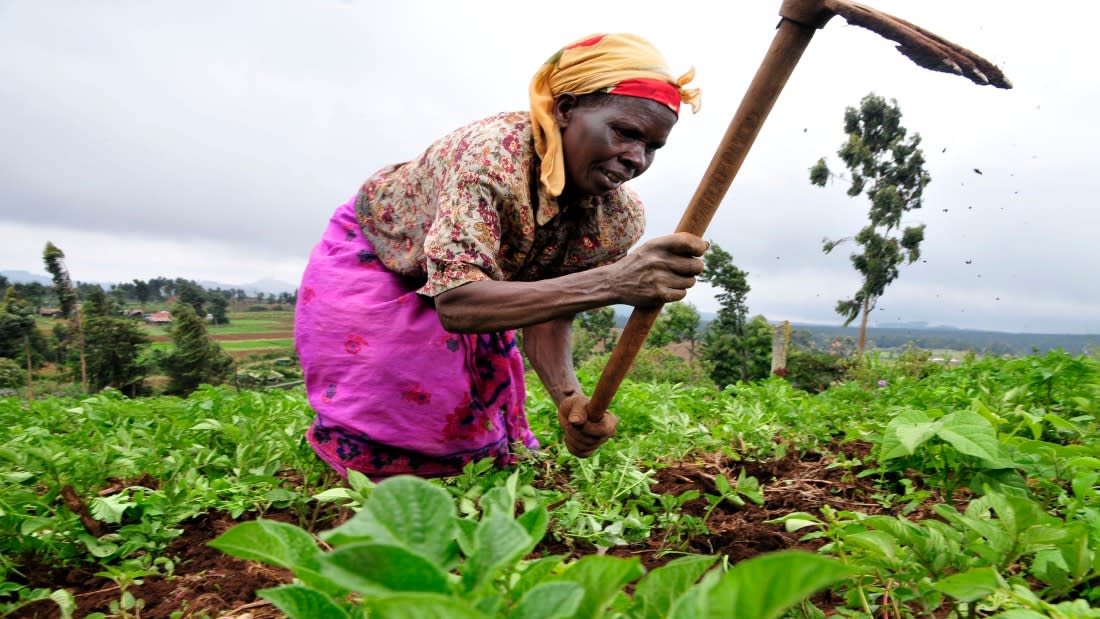
Agriculture can perform strongly in a good rainfall year without substantially increasing productivity.
And GDP can rise without household incomes improving proportionately.
For Zambia, therefore, the composition of growth matters almost as much as the growth rate.
Copper can lift the economy. It cannot transform it alone.
Mining is likely to remain one of Zambia's major growth engines.
That is not a weakness in itself.
The problem arises if copper remains primarily an export commodity rather than becoming the foundation for a wider industrial ecosystem.
The opportunity is to build more Zambian capability around mining: engineering services, equipment, logistics, fabrication, processing, technology and specialised business services.
The same logic applies to agriculture.
The economic opportunity is not simply producing more maize.
It is developing irrigation, storage, agro-processing, cold chains, logistics, inputs and regional markets.
That is what makes the government's language around value addition, production and exports important.
The test is whether those words translate into investment.
Electricity could determine whether the growth story holds
There is an even more immediate constraint.
Electricity.
Zambia cannot seriously pursue industrialisation while energy supply remains unreliable.
The IMF expects improved electricity supply to support medium-term growth.
But fixing the power constraint requires capital at precisely the moment when fiscal policy is supposed to remain tight.
That is why private capital matters.
Government does not necessarily need to finance every new megawatt itself. But it does need to create conditions under which private investors can finance generation, transmission and related infrastructure at reasonable risk.
This brings the new programme back to its most important phrase:
private-sector-led growth.
What does this mean for a Zambian business?
This is ultimately where the IMF programme becomes real.
For a manufacturer, it means whether electricity is reliable enough to operate.
For an importer, it means whether the kwacha and foreign-exchange market remain sufficiently stable to price inventory.
For a farmer, it means whether roads, storage, irrigation and markets allow production to become a profitable business.
For a mining supplier, it means whether the expansion of copper production creates opportunities for local companies.
For a household, it means whether economic growth eventually produces jobs and higher real incomes.
Macroeconomic stability matters because it changes these conditions.
But stability by itself does not guarantee them.
The danger is becoming good at stabilisation
There is a subtle risk in the new programme.
Zambia could successfully maintain fiscal discipline, meet IMF targets and preserve macroeconomic stability — yet fail to change the underlying structure of the economy.
That would produce a stable version of the same economy.
And that is not enough.
The previous programme was successful to the extent that it helped move Zambia away from the immediate consequences of default and macroeconomic instability.
The next programme will be judged against a different standard.
Did Zambia become more productive?
Did private investment increase?
Did exports diversify?
Did electricity reliability improve?
Did manufacturing expand?
Did agricultural productivity rise?
Did formal and productive employment grow?
Did household incomes increase?
Those are much harder questions than whether the fiscal numbers met an IMF performance criterion.
The US$1.47 billion is therefore not the main story
The financing matters.
The IMF programme matters.
Debt sustainability matters.
But the bigger story is that Zambia is moving from an era of stabilisation to an era of execution.
The country has made genuine progress in rebuilding macroeconomic credibility. The challenge now is avoiding the two extremes: returning to the fiscal excesses of the past, or pursuing such tight consolidation that investment and growth are weakened.
The solution lies in the quality of the adjustment.
Raise more revenue.
Spend better.
Control fiscal risks.
Protect productive investment.
Crowd in private capital.
And use mining and agriculture as platforms for broader economic diversification rather than as ends in themselves.
That is the economic bargain embedded in the new IMF programme.
Zambia has spent the past four years repairing the balance sheet. The next four will determine whether that repair becomes a foundation for growth — or simply a more stable way of managing the same structural weaknesses.