Zambia wants to grow by about 7% a year.
On paper, it is an attractive number.
But economic growth does not happen because Government puts a target in a budget document.
Someone has to produce it.
Someone has to build the factory. Plant the crop. Generate the electricity. Move the goods. Open the business. Hire the worker. Export the product.
That is the uncomfortable question Zambia now needs to confront: what exactly will generate the additional economic activity required to reach 7%?
The country has spent years dealing with debt, inflation, fiscal pressures and economic instability.
Those problems had to be addressed.
But stabilisation is not the same thing as growth.
The next challenge is harder.
Zambia has to increase its productive capacity.
And that cannot be done by Government alone.
Government's job is to make production easier
The biggest mistake would be to interpret the 7% target as a reason for Government to simply spend more.
Zambia does not have unlimited fiscal space.
Government already has competing demands for resources, including debt service, public wages, social programmes and infrastructure.
The better question is not simply: how much can Government spend?
It is:
What can Government do that makes the private sector invest more?
Reliable electricity.
Better roads.
Efficient borders.
Predictable taxation.
Faster business registration.
Secure property rights.
Efficient courts.
Digital public services.
These may sound like ordinary government functions.
They are actually growth infrastructure.
A company deciding whether to invest millions in a factory is not only looking at Zambia's tax rate.
It is looking at whether the electricity will be available.
Whether imported machinery will clear the border.
Whether licences will arrive on time.
Whether roads will move its products.
Whether regulations will suddenly change.
Whether it can repatriate profits.
In other words, the investment climate is itself an economic input.
Electricity may be Zambia's biggest growth constraint
It is difficult to talk seriously about 7% growth without talking about power.
A factory that cannot operate reliably cannot produce reliably.
A farmer who cannot irrigate cannot increase production consistently.
A mine that faces power constraints must find alternative and often more expensive sources.
A small business running equipment on a generator is effectively paying an additional tax.
This is why Zambia's energy problem should not be treated simply as an energy-sector problem.
It is a production problem.
Government needs to accelerate investment in generation, transmission, storage and alternative energy sources.
But it also needs to think differently about the relationship between energy and investment.
The question should increasingly be:
How much new economic activity will this additional megawatt enable?
That is a much more useful way of thinking about infrastructure.
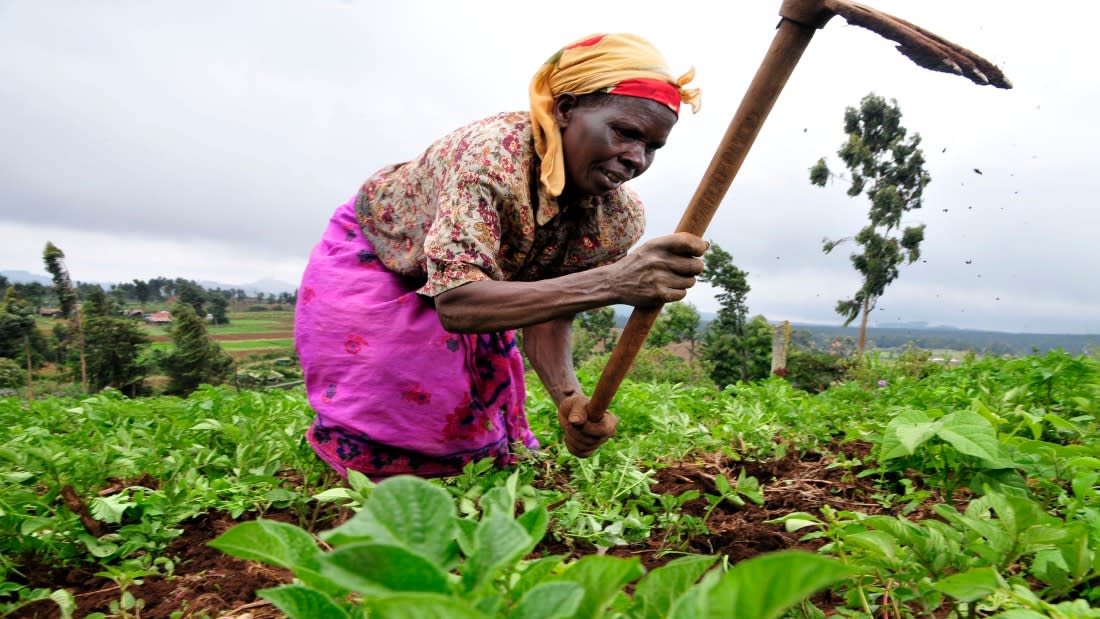
Agriculture needs to become an industry
Agriculture is another obvious route to growth.
But Zambia has spent too much time discussing agriculture primarily in terms of maize, food security and Government support.
The bigger opportunity is commercial agriculture.
Horticulture.
Livestock.
Aquaculture.
Soybeans.
Wheat.
Agro-processing.
Food manufacturing.
Exports.
The country has land.
It has water.
It has a regional market.
What it lacks in many value chains is the infrastructure, finance, technology and market organisation to convert those advantages into large-scale commercial production.
Farmers also need predictable markets.
You cannot expect farmers to make long-term investments if the rules governing crop marketing, imports and exports keep changing.
If Zambia wants agricultural growth, it needs to create conditions where a farmer can make a five-year investment decision with reasonable confidence about the market.
Copper must create more than copper
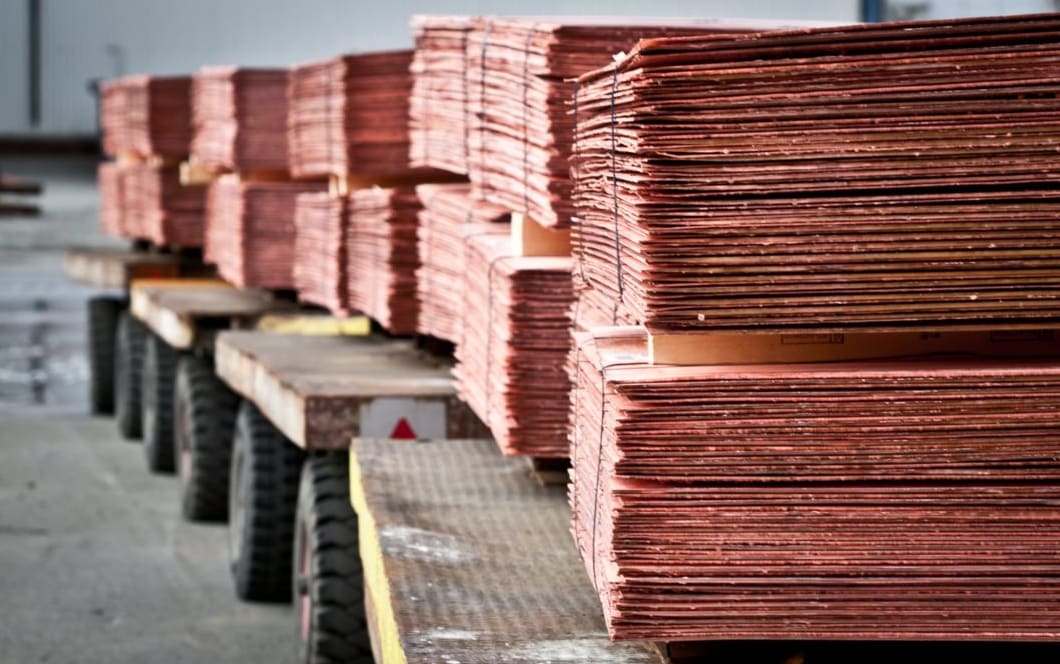
Mining will remain central to Zambia's growth story.
But there is a danger in celebrating higher copper production without asking what happens around the copper industry.
A mine creates demand for engineers.
Transporters.
Equipment suppliers.
Fabricators.
Accountants.
Software companies.
Maintenance firms.
Construction companies.
Financial services.
Training institutions.
This is where the real multiplier effect can emerge.
Zambia should therefore not only ask how much copper will be produced.
It should ask:
How much Zambian business will be created because copper is being produced?
That is the difference between an extraction economy and an economy that develops an industrial ecosystem around its natural resources.
The private sector also needs to change
It is easy to put the entire responsibility for economic growth on Government.
That would be convenient.
It would also be wrong.
The private sector has its own growth problem.
Too many businesses remain focused on surviving the next month rather than building productive capacity for the next five years.
Too many companies have weak financial systems.
Too few invest seriously in technology.
Too few export.
Too few develop products for regional markets.
And too many remain heavily dependent on Government spending.
A 7% economy requires a different private sector.
One that invests.
One that takes calculated risks.
One that adopts technology.
One that trains workers.
One that looks beyond Zambia's 20 million consumers towards the much larger African market.
Banks cannot sit outside the growth story
The financial sector has an equally important role.
A country cannot achieve investment-led growth if businesses cannot access long-term capital.
But this is a two-way problem.
Businesses need to become more bankable.
They need proper accounts, credible financial statements, stronger governance and clearer business models.
Banks, on the other hand, need to develop financing products that better match productive investment.
A business borrowing for machinery should not necessarily be treated in the same way as someone seeking short-term working capital.
If Zambia wants factories, farms and exporters, its financial system has to become better at financing factories, farms and exporters.
Government also needs to become faster
There is another economic cost that rarely appears in the national accounts.
Time.
A delayed licence costs a business money.
A delayed payment costs a contractor money.
A delayed customs clearance disrupts production.
A delayed land allocation postpones investment.
A slow procurement process ties up capital.
Individually, these may look like administrative problems.
Collectively, they become an economic problem.
This is why Government's digitalisation agenda matters.
But putting a slow process online does not automatically make it a fast process.
The objective should be a state that is simpler, faster and more predictable.
A business should not need personal connections to get a routine government service.
It should need to meet the rules.
Zambia also needs to measure the right things
There is a danger that 7% becomes the number everyone celebrates.
But GDP growth alone will not tell us whether Zambia is transforming.
We should also be asking:
How much did private investment increase?
How much did exports grow?
How much domestic value was created?
How many productive jobs were created?
How much electricity became available?
How much did the cost of transporting goods fall?
How many new businesses survived beyond their first few years?
How much did labour productivity improve?
Those indicators tell us whether growth is broadening the economy or simply being driven by a few large sectors.
The real 7% challenge
Zambia does not need another growth slogan.
It needs a production strategy.
Government needs to create the conditions.
The private sector needs to invest.
Banks need to finance productive activity.
Farmers need better markets.
Mining needs stronger local linkages.
Businesses need to become more productive.
And the country needs infrastructure that lowers the cost of doing business.
The target is therefore bigger than a Government target.
It is a question of whether Zambia can build an economy capable of producing significantly more than it does today.
Because ultimately, 7% growth cannot be legislated into existence.
It cannot be borrowed into existence.
It cannot be announced into existence.
It has to be produced.