Moving farmers from subsidies to agricultural loans may improve the sustainability of public spending. But introducing the reform during an El Niño-affected farming season raises an important question: who carries the risk when the rains fail?
The Government's decision to transition the Farmer Input Support Programme (FISP) from a subsidy-based programme towards an agricultural loan scheme, beginning in 2027, is one of the more significant proposed changes to Zambia's agricultural financing model.
On economic grounds, there is a reasonable argument for reform.
For years, FISP has consumed a substantial share of public resources, while questions have persisted about its effectiveness in raising agricultural productivity, improving farmer incomes and helping beneficiaries graduate from government support.
In the 2025 Budget, for instance, approximately K9.27 billion was allocated to FISP, representing about 60% of the entire agriculture, fisheries and livestock budget. The programme's fiscal footprint is difficult to ignore.
There is also a legitimate question about whether a subsidy model that requires repeated government intervention every farming season can remain sustainable indefinitely.
A loan-based model could introduce greater accountability, encourage farmers to treat agricultural inputs as productive investments and potentially allow government to support more farmers with the same resources over time.
But while the economics of reform may be understandable, the timing and design deserve closer scrutiny.
The problem with introducing agricultural debt during a climate shock
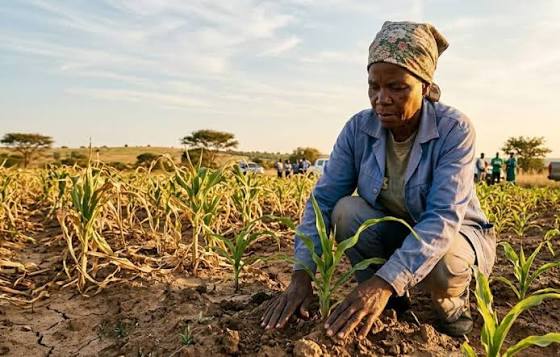
The 2026/2027 agricultural season is already presenting significant weather-related risks.
The Zambia Meteorological Department's September 2026 seasonal outlook warned of below-normal rainfall in several parts of the country, particularly Southern and Lusaka provinces, with the risk extending into parts of Central, Eastern, Copperbelt and North-Western provinces as the season progresses.
The northern parts of the country are expected to experience relatively better rainfall conditions.
These concerns are reinforced by the regional El Niño outlook. FEWS NET has warned that the ongoing strong El Niño could result in delayed and erratic rainfall, prolonged dry spells and above-average temperatures across much of Zambia.
This matters because agriculture is not an ordinary commercial activity where the borrower has complete control over the factors determining returns.
A farmer can obtain good-quality seed, apply fertiliser correctly and follow recommended farming practices, yet still experience a poor harvest because of inadequate rainfall.
Under a subsidy arrangement, government largely absorbs the direct financial cost of providing inputs. Under a loan arrangement, the farmer potentially becomes responsible for repaying the cost of those inputs regardless of whether the season delivers a good harvest.
That changes the distribution of risk.
If a farmer borrows to purchase inputs and experiences a good harvest, the arrangement can work well. The farmer earns an income, repays the loan and potentially accesses financing again in the following season.
But what happens when the harvest fails?
Should a farmer who loses a crop because of prolonged dry spells still be expected to repay the full loan? What happens to their access to future agricultural financing if they cannot meet repayment obligations?
These are not merely theoretical concerns. They go to the heart of whether agricultural credit can work for smallholder farmers in a country where rainfall remains a major determinant of production.
The fiscal argument for reform is still valid
It would be wrong, however, to suggest that the existence of climate risks means Zambia should retain the current subsidy model indefinitely.
Government has competing priorities and limited fiscal resources. Money allocated to agricultural subsidies cannot simultaneously be spent on irrigation, rural roads, extension services, agricultural research and other productivity-enhancing investments.
The existing FISP model also raises questions about targeting, dependency and whether public resources are reaching farmers who can use them most productively.
A properly designed agricultural financing programme could help address some of these challenges.
It could also encourage the development of a more commercially oriented agricultural sector, where farmers gradually build credit histories, access financial institutions and invest in expanding production.
The objective should not simply be to reduce government expenditure. It should be to improve the productivity generated by every kwacha invested in agriculture.
The challenge is ensuring that the transition does not transfer risks that vulnerable farmers are poorly equipped to absorb.
What would a better transition look like?
Rather than treating the transition as a straightforward replacement of subsidies with loans, government could consider a phased and differentiated approach.
1. Protect the most vulnerable farmers.
Farmers in climate-vulnerable areas and those with limited capacity to absorb financial losses may still require targeted input support. Moving everyone into a debt-based system risks treating farmers with very different circumstances as though they have the same capacity to repay.
2. Link agricultural credit to weather-indexed insurance.
Agricultural loans should ideally be accompanied by insurance arrangements that provide protection when rainfall or other weather conditions fall below defined thresholds. This would reduce the likelihood of farmers being left with unsustainable debt after a climate-related crop failure.
3. Introduce the reform gradually.
A phased transition would allow government to test the model, assess repayment rates, identify operational weaknesses and establish whether participating farmers are genuinely better off. The first year should be treated as a learning period rather than an opportunity to move every beneficiary into a new financing arrangement.
4. Invest in irrigation and climate-smart agriculture.
Reducing dependence on rainfall is perhaps more fundamental than changing how farmers pay for fertiliser. Investment in irrigation, water harvesting, drought-tolerant seed varieties, extension services and conservation farming would help reduce the underlying production risks that make agricultural lending difficult.
5. Establish clear rules for crop failure.
Before farmers take on loans, government must clarify what happens when borrowers experience crop losses caused by drought or other natural disasters. There should be transparent provisions for restructuring, insurance payouts and, where justified, partial debt relief.
The bigger question: What kind of agricultural sector are we building?
Ultimately, Zambia needs to move towards an agricultural sector that is productive, commercially viable and less dependent on repeated government subsidies.
But commercialisation cannot simply mean asking smallholder farmers to borrow money and take on greater financial responsibility.
It must also mean creating an environment in which they have access to reliable markets, affordable financing, appropriate technology, irrigation, insurance and the information needed to make sound production decisions.
The transition from subsidies to agricultural credit may form part of that broader transformation. However, the success of the reform will depend less on whether government calls FISP a loan scheme or a subsidy programme, and more on how the risks, incentives and responsibilities are structured.
There is a difference between encouraging farmers to become commercially independent and exposing them to financial obligations they cannot reasonably manage when circumstances beyond their control affect production.
The question, therefore, is not simply whether Zambia should reform FISP. It is whether the country is putting the necessary protections and supporting infrastructure in place before asking smallholder farmers to carry more of the financial risk.
Agricultural reform should build resilience, not simply redistribute risk from the Treasury to the farmer.