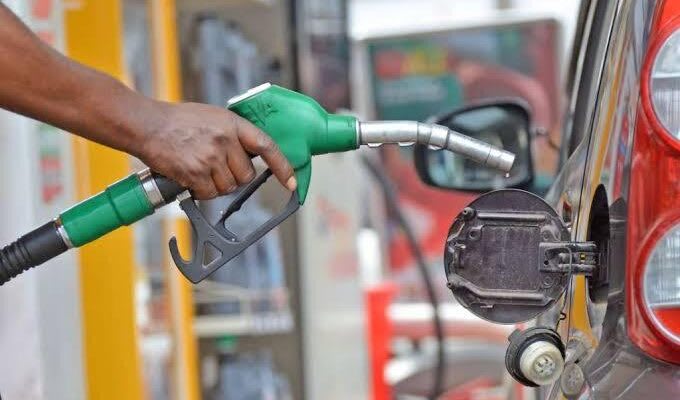
When the price of fuel rises, the pain is immediate. It appears at the filling station, in transport fares, in the cost of moving goods and eventually in the prices consumers pay for food and other essentials. That is why the Zambian Government's decision to suspend excise duty and zero-rate Value Added Tax (VAT) on petrol and diesel imports made economic sense when it was introduced in April 2026. With global oil prices rising amid the crisis in the Middle East, the measure was intended to cushion households and businesses from another fuel-price shock.
But there is another side to the policy that is less visible to the public. Someone still has to pay for the relief. In this case, that someone is the Treasury.
The Government initially introduced the fuel tax relief for three months, from April to June 2026, before extending it for another three months from July 1 to September 30. When the waiver was first introduced, Government estimated that the initial three-month intervention would cost approximately US$200 million in foregone revenue. That figure provides a useful benchmark for understanding the scale of the policy.
If the original US$200 million estimate is spread evenly across the three months, the implied fiscal cost is approximately US$66.7 million per month. At that rate, the six-month period from April through September could represent roughly US$400 million in foregone revenue. By September 7, the implied cumulative cost would be around US$349 million. At an exchange rate of approximately K19 per US dollar, that translates into roughly K6.6 billion in foregone tax revenue. By the end of September, the figure could approach K7.6 billion.
These figures should not be mistaken for audited Treasury outturns. They are a simple extrapolation from Government's original US$200 million estimate, and the actual cost will depend on fuel import volumes, international prices, exchange rates, consumption and the resulting tax base. Nevertheless, even as an indicative calculation, the numbers are large enough to change the nature of the debate. This is no longer simply a question of whether motorists should pay more or less for a litre of petrol or diesel. It is a question of what Zambia is willing to sacrifice from its public finances to keep fuel prices lower.
There is a legitimate economic case for the waiver. Fuel is not an ordinary consumer product. Petrol and diesel are inputs into almost every part of the economy. Trucks require diesel to move goods. Farmers depend on fuel to operate machinery and transport produce. Businesses incur fuel costs in their logistics operations, while public transport operators face fuel costs that influence fares. When fuel becomes expensive, the shock travels through the economy. Reducing fuel taxes can therefore provide benefits beyond the person filling a private vehicle. It can reduce transport and logistics costs, moderate inflationary pressures and give businesses some breathing room.
For Government, the argument is straightforward: sacrificing tax revenue today may prevent a much larger economic shock tomorrow. That is a legitimate economic policy argument. But it does not answer another important question: who actually benefits from the relief?
A fuel tax waiver is a broad instrument. A household that consumes 50 litres a month receives some benefit, while a household consuming 500 litres receives considerably more. A small trader who occasionally purchases fuel benefits, but a large logistics company operating a fleet of trucks benefits substantially more. The policy therefore does not necessarily distribute the fiscal sacrifice according to economic need.
This matters because Government is effectively using public revenue to reduce the cost of a commodity consumed disproportionately by those who consume more of it. An alternative approach could have been to use part of the fiscal space for more targeted interventions, such as cash transfers, public transport support, agricultural production or assistance to particularly vulnerable households and productive sectors. That does not automatically mean targeted support would have been better than the fuel waiver. It means the alternatives should be compared against the cost of the current policy.
The political attraction of a fuel waiver is easy to understand. The benefit is visible. Consumers see the price at the pump. The fiscal cost is much less visible. There is no display at a filling station showing how much tax revenue Government has surrendered that month. That cost appears somewhere else, in the public finances, where it competes with spending on health, education, infrastructure, social protection and debt obligations.
This creates a fundamental challenge for fiscal policy. If Government collects billions of kwacha less in VAT and excise duties, something else eventually has to adjust. It could be expenditure, borrowing, the fiscal deficit or pressure to increase other sources of revenue. This is particularly important for Zambia because the country is simultaneously trying to strengthen domestic revenue mobilisation and maintain fiscal consolidation.
The International Monetary Fund has already highlighted the suspension of fuel VAT and excise duties as one of the factors contributing to weaker tax collection and a deterioration in Zambia's projected fiscal position. This creates an uncomfortable policy tension. Zambia needs stronger domestic revenue mobilisation, yet at the same time it is deliberately giving up a significant source of domestic revenue.
There may be good economic reasons for doing this temporarily. The problem begins when temporary emergency relief becomes difficult to withdraw.
The real test, therefore, should not simply be whether the fuel waiver reduced prices. It did. The more important question is whether the economic benefits are worth the revenue Zambia is giving up.
Government should be able to estimate how much consumers have saved as a result of the policy, how much businesses have saved, how much inflation was avoided and how much of the benefit reached lower-income households. That would allow policymakers to answer a much more important question than the headline cost: what did Zambia get for the billions of kwacha it sacrificed?
If the country gave up K7 billion but prevented a major inflationary shock, protected businesses, reduced transport costs and preserved household purchasing power, the policy may prove to have been worthwhile. If much of the benefit accrued to higher fuel consumers while the fiscal position deteriorated, then the same resources might have generated greater economic and social returns elsewhere.
Without that analysis, Zambia knows the cost of the intervention but has only a partial picture of its return.
The September 30 expiry of the current waiver should therefore be more than another administrative deadline. It should be an opportunity for Government to publish a proper assessment of the intervention before deciding whether to extend it again. How much revenue was actually forgone? How much did motorists save? What happened to transport costs? What happened to inflation? How much did businesses save? And perhaps most importantly, who benefited?
There is also a need for greater transparency around the counterfactual. Zambians should know what the pump price would have been if VAT and excise duties had remained in place. Only then can citizens properly understand the size of the relief they are receiving and the fiscal price being paid on their behalf.
The temptation in public policy is to celebrate the visible benefit while ignoring the invisible cost. But tax policy does not make costs disappear. A tax waiver simply transfers the cost from the consumer at the pump to Government's balance sheet. And ultimately, Government's balance sheet belongs to the public.
The fuel waiver may have been the right decision when global oil prices were threatening another inflationary shock. But a policy can be justified when it is introduced and still require reassessment several months later. Circumstances change, fiscal pressures change and the cost of continuing an emergency intervention becomes increasingly important.
Based on Government's original estimate of US$200 million for the first three months, Zambia could be approaching US$350 million in foregone revenue by early September, with the six-month cost potentially reaching approximately US$400 million by the end of September. At around K19 to the dollar, that is a potential fiscal sacrifice of more than K7 billion.
That is too much money for the country to evaluate the policy simply by asking whether fuel is cheaper.
The harder question is the one that matters: was the relief worth what Zambia gave up to provide it?
Before another extension is considered, Government should give the public the numbers.
Because cheap fuel at the pump is not free.
Someone is paying the bill.