Zambia's economic recovery is beginning to open a new conversation about investment. With inflation easing, progress on debt restructuring and renewed interest from development finance institutions, attention is gradually shifting from stabilising the economy to expanding productive capacity.
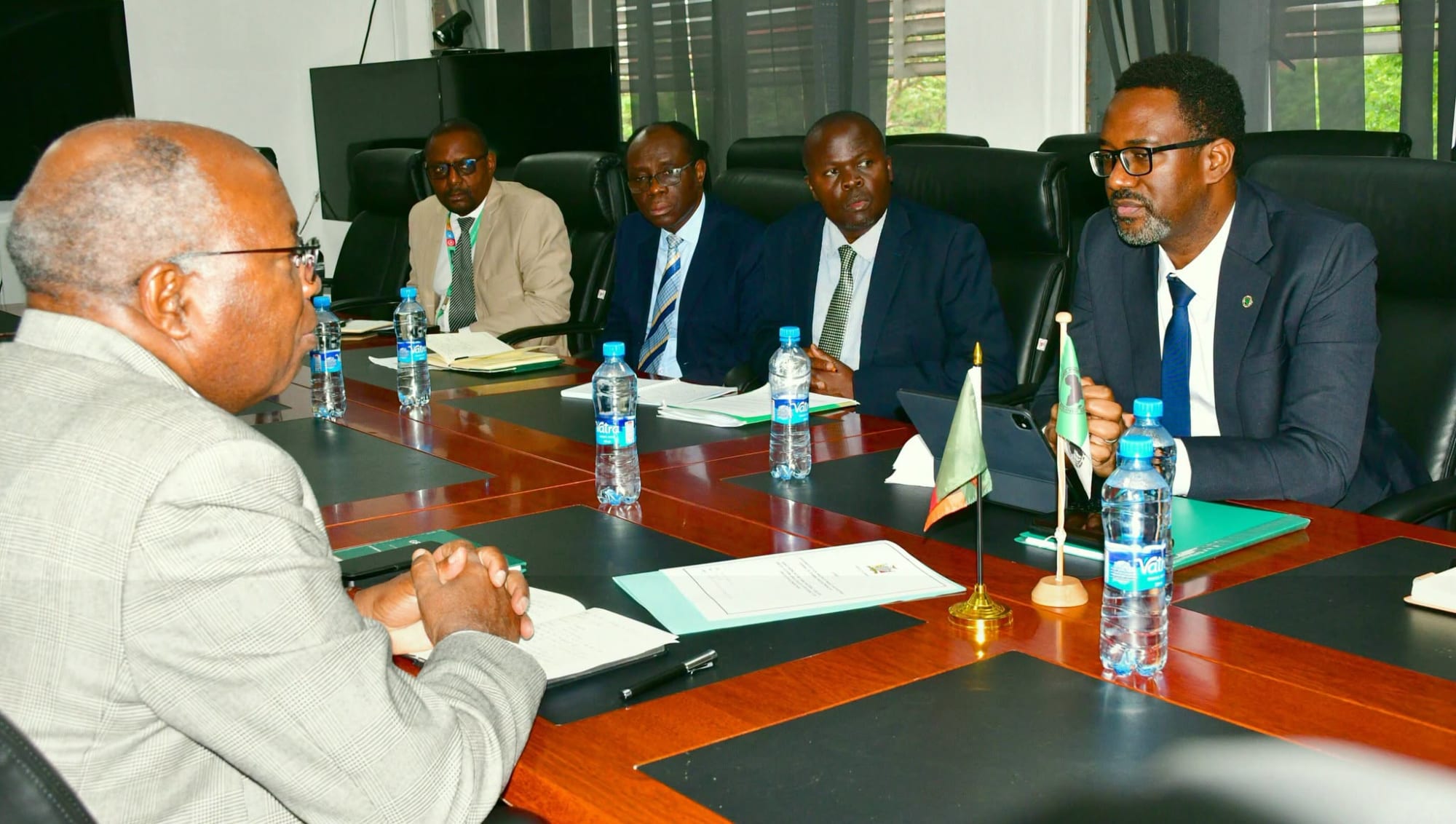
The latest engagement between the Government and the African Development Bank (AfDB) offers an indication of where some of the next investment opportunities could emerge. But beyond the infrastructure announcements and financing commitments, there is a more important question for the private sector: How much of this emerging investment will actually benefit Zambian businesses?
The AfDB has indicated that it has approximately US$394 million in private-sector financing headroom for Zambia, subject to project readiness, appraisal and approval. Its indicative 2027 investment pipeline covers energy, transport infrastructure, agro-processing and industrial development.
These are not insignificant opportunities. However, financing availability alone does not guarantee investment. The ability of businesses to develop credible projects, demonstrate commercial viability and meet financing requirements will determine who ultimately benefits.
Infrastructure investment creates opportunities beyond construction
The proposed investments in the Lobito Corridor, TAZARA and Zambia Railways could have implications well beyond the companies directly involved in construction.
Improved transport infrastructure reduces the cost and uncertainty associated with moving goods. For a country whose competitiveness is heavily influenced by transport costs, this could have a meaningful impact on businesses operating in mining, agriculture, manufacturing and trade.
Better rail connectivity could make it more commercially viable for agricultural producers and processors to access regional and international markets. Businesses located along transport corridors could also benefit from increased demand for warehousing, logistics, storage, equipment maintenance and distribution services.
The proposed dual carriageways along the Lusaka–Livingstone and Kafue–Chirundu routes, potentially delivered through public-private partnerships, could similarly create opportunities for local contractors, engineering firms, suppliers and transport operators.
However, local businesses should not assume that infrastructure investment automatically translates into local participation. Large projects often require substantial financial capacity, technical experience, equipment and compliance systems.
The opportunity is therefore not limited to winning major construction contracts. Smaller businesses can position themselves as suppliers and service providers within the wider infrastructure value chain.
Agriculture and agro-processing could offer some of the biggest opportunities
The inclusion of agro-processing, irrigation, food security and climate resilience in the AfDB's investment pipeline is particularly important.
Zambia has considerable agricultural potential, but much of the value generated from agricultural production is still constrained by inadequate storage, limited processing capacity, unreliable energy and weak connections between producers and markets.
Investment in irrigation could reduce dependence on rainfall and support more consistent production throughout the year. Improved storage and processing infrastructure could also reduce post-harvest losses and allow businesses to supply markets more reliably.
For local entrepreneurs, this presents opportunities in food processing, milling, cold-chain logistics, packaging, agricultural inputs, equipment maintenance and commercial farming.
There is also a case for looking beyond traditional agricultural commodities. Businesses that can convert locally produced raw materials into higher-value finished products may be better positioned to benefit from expanding markets.
The proposed development of industrial-scale commercial forestry plantations is another area worth watching. If properly developed, this could support opportunities in timber processing, furniture manufacturing, construction materials and related industries.
The broader lesson is that Zambia needs more businesses participating in value addition rather than relying predominantly on the export of unprocessed commodities.
Access to finance is important, but bankability is the missing link
One of the more interesting aspects of the Government's engagement with the AfDB is the proposed coordination of three financing instruments:
- The K400 million allocation for a Development Finance Institution expected in 2027.
- The K5 billion Government Guarantee Fund.
- Viability-gap financing for public-private partnerships.
Together, these instruments could help address some of the financing constraints facing productive businesses.
A Development Finance Institution could provide longer-term financing for investments that commercial banks may consider too risky or too long-term. Government guarantees could help reduce lending risks, while viability-gap financing could make commercially marginal infrastructure projects more attractive to private investors.
However, the effectiveness of these facilities will depend heavily on their governance, transparency and implementation.
The K5 billion Guarantee Fund, for instance, should not simply become another financing announcement. Its design should clearly establish which businesses and projects qualify, how risks are assessed, how guarantees are allocated and how public exposure is managed.
There is also a need to ensure that smaller Zambian businesses are not excluded by complicated application procedures or requirements that only large corporations can satisfy.
Most importantly, businesses must understand that access to development finance is not simply about having a good business idea.
Financiers want to see credible financial statements, realistic cash-flow projections, clear ownership structures, identifiable markets, competent management and evidence that a project can generate sufficient returns to repay its financing.
This is where many otherwise promising businesses struggle.
How should Zambian businesses position themselves?
The emerging investment pipeline provides an opportunity for businesses to start preparing before projects are formally rolled out.
There are several practical steps worth considering.
1. Position around sectors receiving investment attention.
Businesses should identify where their capabilities intersect with the emerging priorities in transport, energy, agriculture, agro-processing and industrial development.
This does not mean every business should enter these sectors. It means identifying opportunities within the supply chains that larger investments will create.
2. Strengthen financial management and record keeping.
Businesses seeking institutional financing need to move beyond informal bookkeeping. Proper financial statements, tax compliance, documented revenues, cost structures and cash-flow projections are essential.
A business that cannot demonstrate its financial position will struggle to convince financiers, regardless of how promising its commercial idea may be.
3. Develop bankable projects rather than relying on general business proposals.
Entrepreneurs should begin developing detailed investment proposals supported by market assessments, capital requirements, projected returns, implementation plans and risk assessments.
For larger opportunities, businesses may need to collaborate through joint ventures, consortia or partnerships to combine financial and technical capacity.
4. Build technical capacity and meet procurement standards.
Companies hoping to participate in major infrastructure and industrial projects should invest in technical certifications, occupational safety, quality assurance, environmental compliance and procurement readiness.
These requirements are often as important as the price quoted when competing for institutional contracts.
5. Think beyond the domestic market.
Infrastructure improvements and regional connectivity could strengthen Zambia's position as a production and distribution hub within the region.
Businesses should therefore consider whether their products and services can compete in neighbouring markets, particularly as transport links improve.
The bigger challenge is turning economic recovery into productive investment
The AfDB's recognition of Zambia's economic recovery is encouraging, but the country must now confront a different set of economic challenges.
Macroeconomic stability is a necessary foundation for investment, not an end in itself. Lower inflation and progress on debt restructuring can improve the investment environment, but sustainable growth ultimately requires businesses to expand production, employ more people, increase exports and invest in productive capacity.
The Government's intention to introduce monthly performance reviews across economic sectors could help strengthen implementation discipline. However, the quality of these reviews will depend on whether they measure actual outcomes rather than simply activities and expenditure.
For the private sector, the next few years could present opportunities in sectors that have historically struggled to attract sufficient long-term capital.
But the benefits will not be distributed automatically. Businesses with stronger management systems, financial discipline, technical capacity and the ability to identify opportunities early will have an advantage.
The US$394 million in AfDB private-sector financing headroom is an opportunity worth watching. So are the proposed domestic financing instruments and the infrastructure pipeline.
Zambia's investment ambitions should be measured not only by how much external financing is mobilised, but by how much productive capacity is created locally, how many Zambian businesses become competitive suppliers, and how many sustainable jobs are generated.
The next phase of Zambia's economic recovery should be about building businesses capable of taking advantage of the opportunities that economic stability makes possible.