A new Zambian novel is using the story of one child to examine some of the less visible challenges facing families and communities.
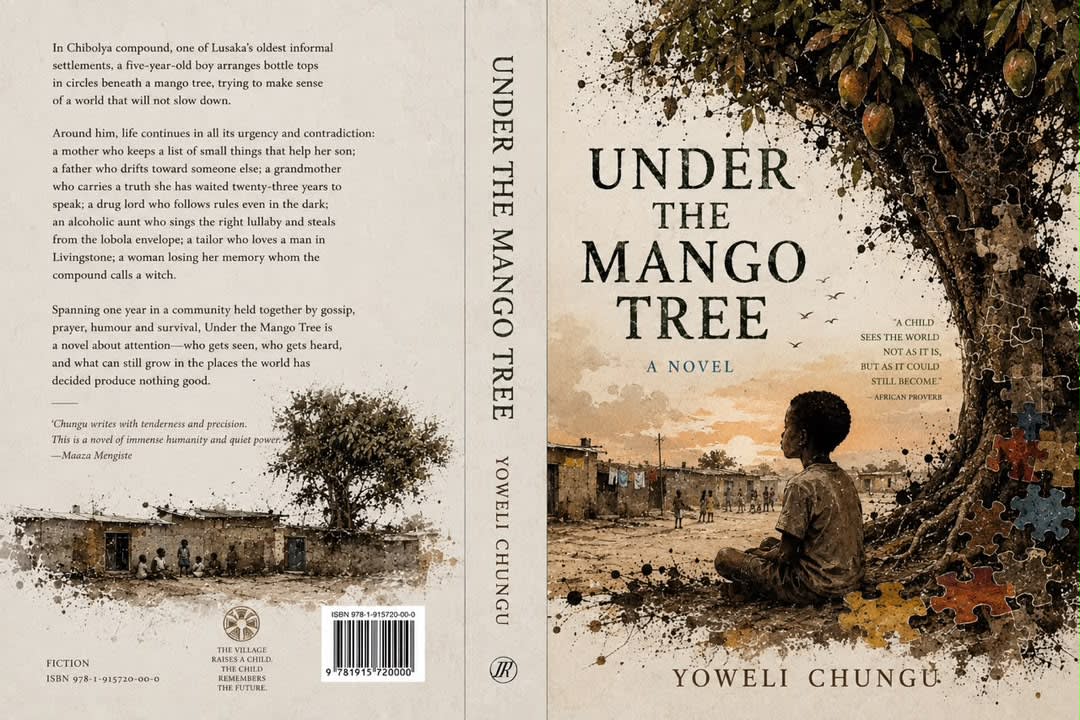
Under the Mango Tree, the first published book by Zambian writer and filmmaker Yoweli Chungu, follows Junior, an autistic child growing up in Chibolya.
The novel explores autism through the experiences of Junior and his family, but its subject is broader. It touches on childhood, poverty, family, faith, community life, disability and the difficulty of understanding people whose experiences do not fit familiar expectations.
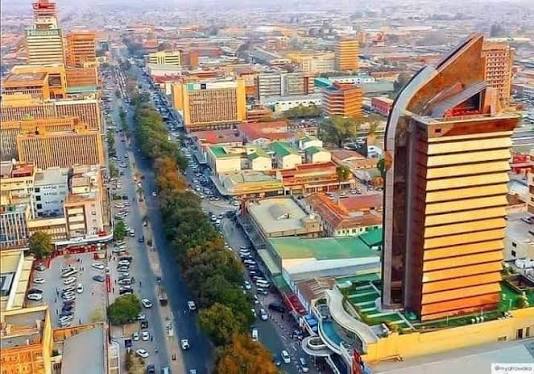
Chibolya is central to the story.
Rather than using the compound simply as a setting for hardship, Chungu presents it as a community with its own relationships, beliefs, humour, conflicts and aspirations.
That approach gives the story a distinctly Zambian setting while allowing it to examine issues that extend beyond one community.
A mother searching for answers
In one of the early chapters, "A Different Child," Junior's mother Hildah begins to recognise that her son is developing differently from other children.
She notices his fascination with light, shadows and particular sounds. He observes people differently and does not always respond to faces or his name in the way she expects.
When some of the few words he has begun using disappear, her concern deepens.
But Hildah initially has no clear explanation for what she is seeing.
The uncertainty becomes part of her own struggle. She begins questioning whether something during pregnancy or early childhood could have caused the changes she is seeing.
Her mother-in-law, Ba Ruth, challenges that guilt, telling her that the child's condition is not the result of her mistakes.
It is a small family exchange, but it captures one of the themes running through the novel: the burden parents can carry when they do not have enough information to understand what is happening to their children.
When information is limited
As Hildah searches for answers, the community offers its own explanations.
Some interpret Junior's behaviour through traditional beliefs. Others see it through a religious or spiritual lens.
Hildah eventually seeks help from a church, hoping that prayer might provide an answer. Instead, the experience leaves her confronting the limits of explanations based solely on faith.
The novel uses this part of the story to explore a difficult reality: when reliable information about disability and developmental conditions is limited, families may turn to whatever explanations are available to them.
That can include family advice, traditional beliefs, religious interpretations or other community explanations.
For Hildah, the turning point is the realisation that what she needs is knowledge and a language through which she can understand her son.
Beyond the autism story
This is what makes Under the Mango Tree broader than a story about one child's condition.
Junior's experience is connected to the circumstances around him.
His family has its own pressures. The community has its own beliefs. Poverty shapes the choices available to people. Faith provides both comfort and explanations. And traditional ideas continue to coexist with modern life.
The novel therefore places autism within the everyday realities of a Zambian community rather than treating it as an isolated medical or social issue.
It also raises questions about how society responds to difference.
What happens when a child behaves differently but the people around him do not understand why?
How does a family respond when professional information is difficult to access?
And how much can a child's experience be shaped by the assumptions of the people around him?
These questions give the novel relevance beyond its fictional setting.
Chibolya as a community
The choice of Chibolya is also worth noting.
Zambian compounds are often represented in public discussions primarily through poverty, crime or inadequate infrastructure. Chungu's story takes a wider view.
Chibolya becomes a social environment — a place where people raise children, form relationships, hold religious beliefs, deal with conflict and find ways to survive.
That allows the novel to present the community with both its difficulties and its humanity.
It is also part of what makes the story recognisably Zambian. The setting is not simply a backdrop to Junior's life; it influences the people around him and the explanations they use to make sense of the world.
A conversation about disability and understanding
At its centre, Under the Mango Tree is concerned with the gap between difference and understanding.
Junior experiences the world differently. The people around him must decide how to respond to that difference.
The book consequently opens a wider conversation about autism and disability in African communities, including the role of family, faith, cultural beliefs and access to information.
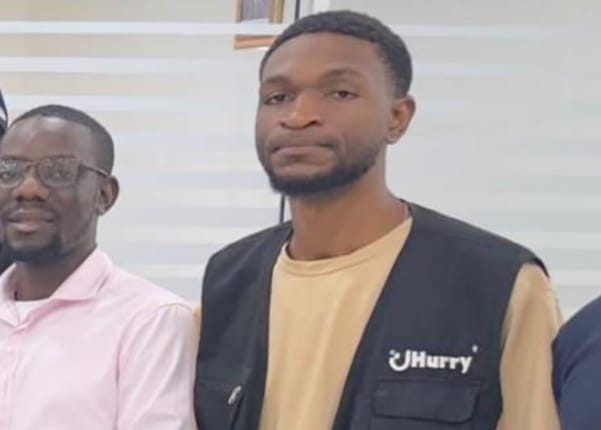
For Chungu, the book also represents a move from filmmaking into fiction.
That shift gives him a different space in which to explore a subject that is difficult to capture through headlines or statistics: the private experience of a family trying to understand a child.
The result is a story rooted in Chibolya but dealing with questions that will be familiar to many families — how we understand children, how communities explain difference, and what happens when love is present but knowledge is limited.
Under the Mango Tree is Chungu's first published book.
It is available through Booklovers Namibia.
Purchase the book:
Booklovers Namibia — Under the Mango Tree
KSJ Book Spotlight is an editorial feature highlighting books by Zambian and African authors and the social, economic and cultural questions explored in their work.
#UnderTheMangoTree #YoweliChungu #ZambianLiterature #AfricanLiterature #ZambianWriters #ZambianStories #AfricanStorytelling #AutismAwareness #DisabilityInclusion #Chibolya #Lusaka #BookSpotlight #KatondoStreetJournal