“I was told that when life gives you lemons, make lemonade. However, no one mentioned where to get the sugar.” — Dr. Annie Mulamba Chibesakunda
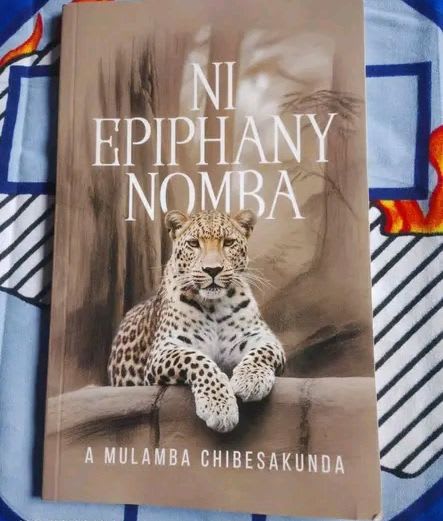
There is something immediately disarming about Ni Epiphany Nomba.
Written by Zambian medical doctor, neonatal fellow and author Dr. Annie Mulamba Chibesakunda, the collection brings together poetry and short stories that move away from the children’s storytelling that has characterised much of her earlier work.
Chibesakunda’s debut, My Zambian Folktales and Geotale, was first runner-up at the National Coppa Book Awards. She followed it with My Zambian Folktales and Fireflies and My Zambian Folktales and Herotales.
With Ni Epiphany Nomba, however, the audience changes. This is writing that speaks more directly to the adult reader — and it does so without much cushioning.
A mirror rather than an escape
The strongest feature of the collection is its honesty.
Chibesakunda writes about situations that feel familiar: relationships that go wrong, choices we regret, dreams that remain unfinished and the quiet frustrations that accompany ordinary life.
That familiarity is part of the book’s appeal. You may laugh at a character, only to recognise something of yourself in the situation a few lines later.
The stories and poems often invite the reader to stop and reconsider. Why did this character make that decision? Was there a warning that was ignored? Could things have turned out differently?
Rather than providing easy answers, the collection leaves those questions with the reader.
The stories
The anthology opens with The Beastman, a poem that introduces the darker, more introspective side of the collection.
“Imagine the yearnings of the beastman,
The reason he thrives in the dark.
Imagine why he can never be a free man…”
The poem immediately establishes one of the collection’s recurring concerns: the tension between who we are, who we want to be and the circumstances that keep us where we are.
There is also humour.
In A Katolika’s Date, first published on Reedsy, a Catholic woman finds herself on a blind date with a Pentecostal man. The encounter quickly becomes a catalogue of warning signs — beginning with the fact that her date arrives in a borrowed church bus.
The narrator reflects:
“I glanced up at the sky, almost expecting to see Father Abraham shaking his head at me…”
It is funny, but there is something more serious underneath the humour. The story is ultimately about ignoring the little signs that tell us something may not be quite right.
The epiphany
Across the collection, Chibesakunda returns to love, pain, brokenness, disappointment and unfulfilled expectations.
Her use of metaphor and imagery gives the work a reflective quality, but the writing remains grounded in recognisable human experiences.
That is perhaps where the title becomes most meaningful. The “epiphany” is not necessarily one dramatic revelation. Sometimes it is simply the moment when we finally recognise what was in front of us all along.
Ni Epiphany Nomba is therefore less about escaping reality than looking at it closely — sometimes with laughter, sometimes with discomfort, and sometimes with a little regret.
And perhaps that brings us back to the book’s opening thought.
When life gives you lemons, make the lemonade.
But as Chibesakunda reminds us, don't assume someone else will provide the sugar.