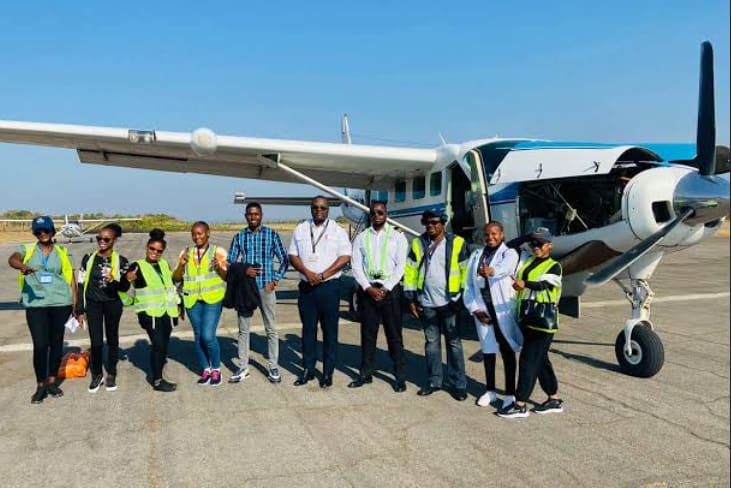
SENANGA — Specialist healthcare is being taken closer to communities that often have to travel long distances for services, with the Zambia Flying Doctors Service currently conducting a multidisciplinary medical outreach in Senanga District.
The outreach is providing a range of specialised services to residents, particularly patients who face barriers to accessing care because of distance, transport costs and the limited availability of specialist services in remote areas.
Among the services being offered are general surgical consultations and procedures, alongside other specialist medical services delivered by a multidisciplinary team. The outreach also includes free reading glasses for residents who require assistance with near vision, providing a relatively simple intervention that can make a significant difference in everyday activities such as reading, working and studying.
For patients requiring surgery, the presence of a specialist team in the district reduces the need to travel to larger referral centres for conditions that can be managed locally. It also gives healthcare workers an opportunity to work alongside specialists and strengthen the delivery of services at district level.
The Senanga outreach highlights a persistent challenge in Zambia's health system: access to healthcare is not determined only by whether a service exists, but also by whether people can physically reach it.
For communities in remote and rural areas, specialist care can remain effectively out of reach when the nearest service is several hours away and transport costs compete with household needs.
The Flying Doctors model attempts to address that gap by bringing teams and services to communities rather than requiring every patient to travel to where specialists are based.
The Senanga programme therefore represents more than a temporary medical camp. It demonstrates how targeted outreach can complement the existing health system by extending specialised services to areas where permanent specialist capacity may be limited.
As Zambia continues to expand healthcare access, such interventions remain important in narrowing the distance between the availability of medical expertise and the communities that need it most.